Showing posts with label spice. Show all posts

Friday, March 18, 2016

What are the health benefits of nutmeg?

Known as a popular spice around the world, nutmeg is also popular for its many health benefits. Nutmeg fruit is the only tropical fruit that is source of two different spices: nutmeg and mace.

Nutmeg has been found to be an effective anti-diarrheal agent, reducing the amount of stool, increasing the period between evacuations and improving intestinal tone while inhibiting the contractions that would normally be stimulated by irritating agents.

American herbalists use nutmeg as a digestive remedy for nausea, vomiting, indigestion and diarrhea.

The fruit is a good source of vitamins A, C and D, minerals (calcium, manganese, iron, copper, potassium and magnesium), carotenoids and essential volatile oils.

Nutmeg consumed as a brain tonic during ancient Roman and Greek. This due to the nutmeg can effectively stimulate human brain which resulted in eliminate fatigue and stress.

Nutmeg oil relieves stomachaches by removing the excess gas from intestines. Nutmeg also can boost appetite.

Modern research has revealed that nutmeg extract possess aphrodisiac activity. Nutmeg also has other effects beneficial to sexual health; it can help increase circulation, lower cholesterol and lower blood pressure.
What are the health benefits of nutmeg?

Sunday, December 06, 2015

The health benefits of cinnamon

Cinnamon is a spice, derived from the bark of several trees belonging to the Cinnamomum genus that is well-known among kitchens and chefs around the world.

It is small evergreen tree 10-15 m tall with greenish flowers and has been known since antiquity.

Among the health benefits of cinnamon are:
*Cinnamon help blood sugar control. Cinnamon is showing promise as a way to prevent and counteract the symptoms of type 2 diabetes, having a beneficial effect on glucose levels and insulin sensitivity.

*Can have favorable effects on brain function and memory

*Cinnamon can prevent the spread and growth of cancer cells

*Soothes the stomach, and may help prevent ulcers

*Suppresses the bacteria that causes urinary tract infections and the fungus associated with yeast infections

*Reduces cholesterol levels – in particular, LDL cholesterol and triglycerides without affecting HDL cholesterol. These all reduce risk factors for heart disease, stroke and diabetes. The studies show that as little as a quarter teaspoon per day can significantly lower the cholesterol.

*Cinnamon improves circulation, thins blood and aids in weight control

*It helps arthritis by improving blood circulation and has a warming effect that people with arthritis feel eases their symptoms. It was said that one cup of hot water with two spoons of honey and one table spoon of cinnamon powder, if taken regular even chronic arthritis can be cured.

More studies demonstrated that compounds found in cinnamon improve the function of insulin, functions as antioxidants, anti –inflammatory agents an may be neuroprotective.

Cinnamon’s unique health benefits come from three basic constituents in the essential oil in its bark. The main constituent of cinnamon bark is cinnamon oil, which contain mainly cinnamic acid, cinnamaldehyde and cinnamic alcohol.
The health benefits of cinnamon

Saturday, June 13, 2015

Definition of condiments

According to the International Organization of Standardization (ISO), there is no clear cut division between spices and condiments and as such they have been clubbed together.

The term spices and condiments refer to the natural plant or vegetable products or their mixtures that are virtually indispensable in culinary art.

Many condiments, e.g. vinegars, pickles and chutneys, tomato ketchup, horseradish sauce, mustard and soy sauce are of plant origin.

They are used in various forms such as fresh, ripe, dried, whole, broken and powdered. They impart aroma, taste, flavor, color and pungency to food.

Condiment act principally upon the nervous system.

Some of them, for instance, excite the nerve termini of the mucous membrane of the digestive canal, whence the excitation or stimulus passes to certain centers in the intestine, or to more remote centers in the spinal cord and the brains.

The condiments used in seasoning foods make the food more delectable to the taste and therefore more digestible.

The culinary use of plants as condiment exploits all parts of a plant: leaves (age, bay, basil), stems (ginger, angelica), bark (cinnamon), rhizomes (ginger, turmeric), roots (horseradish), stolons (liquorice), flower buds (cloves).
Definition of condiments

Wednesday, January 28, 2015

The uses of cinnamon

Cinnamon is the dried inner bark of the cinnamon tree, and its value can scarcely be estimated. Cinnamon and cassia have been uses as spices and medicines since ancient times and have long been held in high esteem as aromatics as well as ingredients of oils and perfumes.

The bark has aromatic and sweet taste with a spicy fragrance, due to the presence of essential oil. From sprinkling in buttered toast to a cinnamon stick swirled in cider, the possibilities for using this spice are practically limitless.

The major use of cinnamon bark is for flavoring processed food, the aromatic ingredient of the bark improving the overall flavour of the food item. It is used equally in savory dishes and desserts. It is important for pickling and it is difficult to imagine rice pudding without it.

Cinnamon forms an ingredient of curry powder used in the preparation of meat, fish and vegetable dishes. Meat may be lightly sprinkled with cinnamon to bring out a new flavor, especially lamb chops.

Meat stews and boiled smoked shoulders are more than delicious when cinnamon is added while they are cooking.

One of the most delicious uses of cinnamon is in the flavoring ice-cream.

In medicine, it is frequently added to other substances; as to the bitter infusions, to improve their flavour and to purgatives, to check their griping qualities.
The uses of cinnamon

Wednesday, November 12, 2014

Commercial uses of anise

Anethole is the main constituent of anise and is responsible for the characteristic odor and flavor of anise.

Anise is used in Italian sausage, bologna, frankfurters, knockwurst, pepperoni, pizza topping and other processed meat items. It is used in bakery products and is an essential component of Italian anise cake and cookies. It is also use in beverage and chewing gum.

Oil of anise is used in the meat industry in Italian sausage and pizza toppings.

Its primary use, however, is in licorice-flavored items such as candy, the liqueur anisette, Rosolio de Torino and Usquebough.

Oil of anise also used in dentifrices, perfumes, confections and medicines designed for increasing lactation and for use as a carminative
Commercial uses of anise

Sunday, July 19, 2009

Spice in World of Cooking

Spice in World of Cooking
Food is synonymous with particular places, and certain foods cause immediate recognition of where they come from and how they determine social behavior.

When we think “China,” we might think “dim sum,” similarly, we might think tandoori in India, bouillabaisse in France, couscous in Morocco, a bowl of pho in Vietnam, a satay in Bali, tom yum in Thailand, sushi in Japan and pasta in Italy.

Cuisine is just as much a medium for expressing culture as is art, literature, newspaper, television, architecture or urban design.

It is optimistic enough to think that this symbolism may change in the future.

Food and culture reflect out quality of life to the point where, every country posses, it seems, the sort of cuisine it deserves which is to say the sort of cuisine it is appreciate enough to want.

Until recent times, Australian cooking in general has had very little to do with spices.

In the formative years of white settlement in this country, diet and eating habits were entirely inappropriate to resource, climate and lifestyle.

Our forebears preached austerity, blandness and economical practically at the expense of indulgence and taste.

Reference books and cooking manuals used in Australia in the latter part of the nineteenth century and early twentieth century reveal that household storerooms stocked what we could call today a basic spice collection – a mere twelve or so spices, among them nutmeg, cinnamon, caraway and black pepper.

In contrast, the array we can now access and utilize is dazzling an encouraging sign of gastronomic and epicurean maturity and confidence.

Many fine chefs, cooks and writers in Australia have major contributions over the past couple of decades of changing the perception of Australian cuisine as just shrimp on the Barbie and meat pies.
Spice in World of Cooking

Friday, December 26, 2008

Herb or Spices?

Herb or Spices?
What is the difference between and herb and a spice? Many people ask that question, but almost nobody likes the answer. The truth is the words herb and spice are not well defined, and very attempt to spell out a distinction between them soon runs into exception to the rule.

Generally we know that herb is a plant native to the temperate regions of the earth. Our word derives from Latin herba, meaning “grass,” and most herbs come from soft green leafy plants; unlike shrubs and trees these do not develop woody stems.

We know that the herbs are aromatic and flavorful, with possible medicinal or even aphrodisiac properties, and several definitions specify the present of some fragrant essential oil in the leaves that gives them their potency.

Spices, on the other hand are the precious commodities of tropical regions. The spices are plant parts other than leaves such as bark, roots, seeds, sap or flower buds; they are often dried. They too have outstanding fragrances and strong tastes and often serve additionally as dyestuffs, cosmetics or magic charms.

These distinctions work well enough in general, but many exception immediately spring to mind: Rosemary, for example, is a fine temperate zone herb, but in suitable conditions it can form an enormous woody-stemmed hedge bristling with spiky little leaves, penetrating in its perfume and buzzing with bees; anything but soft! And is lavender an herb? Certainly not tropical – it is decidedly unhappy in too warm a climate - it develops persistent woody stems; and we use both it flowers and its leaves.

Many soft temperate-zone plants, such as anise, caraway, cumin and fennel, are valued not for their leaves but for the aromatic small fruits, which we call seeds. And then there are poppy seeds, which contain no essential oil at all. Our definitions of herbs clearly have both gaps and overlaps.
Herb or Spices?

Saturday, May 31, 2008

Advantages usage of ground spices

Advantages usage of ground spices
Many of the large food company prefer to purchase whole spices and store these in their unbroken condition: then only comminuting, blending or processing them into seasonings as required. Although there is still a significant use of traditional ground spices in food processing, the trend is toward alternative products which have marked technologies advantage.

In use, ground spices do have certain well-established advantage over other forms of seasoning. When used in baked goods (e.g., biscuits, cakes, etc.) the slow flavor release from the unbroken cellular tissues delays and reduces the loss of aromatics due to initial steam distillation and ultimate high temperatures encountered during the baking process. Although losses do occur, the end product is still adequately flavored without recourse to an excessive over-use of spice in the initial dough mix.

The natural spices are of such a flavor level that they may be unincorporated directly into food formulation and, although the quantities involved are generally small, they are readily manageable on the factory scale. From the food processor’s point of view, spices are “natural” and pose no problems when it comes to label declarations.
Advantages usage of ground spices

Monday, June 11, 2007

Melissa officinalis

Spices and Herbs
Balm (Melissa officinalis, Linn.), a perennial herb of the natural order Labiatæ. The popular name is a contraction of balsam, the plant having formerly been considered a specific for a host of ailments. The generic name, Melissa, is the Greek for bee and is an allusion to the fondness of bees for the abundant nectar of the flowers. Balm is a native of southern Europe, where it was cultivated as a source of honey and as a sweet herb more than 2,000 years ago. It is frequently mentioned in Greek and Latin poetry and prose. Because of its use for anointing, Shakespeare referred to it in the glorious lines

"Not all the water in the rough, rude sea
Can wash the balm from an anointed king."

As a useful plant it received attention from the pen of Pliny. From its home it has been introduced by man as a garden plant into nearly all temperate climates throughout the world, and is often found as an escape from gardens where introduced—occasionally in this role in the earliest settled of the United States. Very few well-marked varieties have been produced. A variegated one, now grown for ornament as well as for culinary purposes, is probably the same as that mentioned by Mawe in 1778.
Spices and Herbs

Thursday, May 24, 2007

Esthetic Value of Herbs

Spices and Herbs
Sweet herbs may be made to serve pleasing, an esthetic purpose. Many of them may be used for ornament. A bouquet of the pale pink blossoms of thyme and the delicate flowers of marjoram, the fragrant sprigs of lemon balm mixed with the bright yellow umbels of sweet fennel, the finely divided leaves of rue and the long glassy ones of bergamot, is not only novel in appearance but in odor. In sweetness it excels even sweet peas and roses. 

Mixed with the brilliant red berries of barberry and multiflora rose, and the dark-green branches of the hardy thyme, which continues fresh and sweet through the year, a handsome and lasting bouquet may be made for a midwinter table decoration, a fragrant reminder of Shakespeare's lines in "A Winter's Tale":
"Here's flowers for you;
Hot lavender, mints, savory, marjoram;
The marigold, that goes to bed with the sun
And with him rises weeping."

The rare aroma of sweet marjoram reminds so many city people of their mother's and their grandmother's country gardens, that countless muslin
bags of the dried leaves sent to town ostensibly for stuffing poultry never reach the kitchen at all, but are accorded more honored places in the living room. 

They are placed in the sunlight of a bay window where Old Sol may coax forth their prisoned odors and perfume the air with memories of childhood summers on the farm.
Spices and Herbs

Friday, May 18, 2007

Definitions of Herbs Culinary

Spices and Herbs
It may be said that sweet or culinary herbs are those annual, biennial or perennial plants whose green parts, tender roots or ripe seeds have an aromatic flavor and fragrance, due either to a volatile oil or to other chemically named substances peculiar to the individual species.

Since many of them have pleasing odors they have been called sweet, and since they have been long used in cookery to add their characteristic flavors to soups, stews, dressings, sauces and salads, they are popularly called culinary.

This last designation is less happy than the former, since many other herbs, such as cabbage, spinach, kale, dandelion and collards are also culinary herbs. These vegetables are, however, probably more widely known as potherbs or greens.
Spices and Herbs

Friday, May 04, 2007

Sweet bay

Sweet bay or Laurus nobilis, is a tree which is cultivated throughout Turkey, Israel, Russia, Italy, and France.

A similar tree is found in China but the variety is different and leaves contain an essential oil having a mark phenolic odor not unlike that of Pimento racemosa.

The leaves yield above 2% essential oil when steam distilled.  Known as laurel by the Greeks who wore it as a garland round their heads.

Also known as bay laurel and bay leaves, as a herb the they are use to flavor soups, stew, shellfish, sauces, marinades, poultry and fish dishes.
Sweet bay

Tuesday, April 10, 2007

Cumin

Spices & Herbs
Scientific name is Cuminum cyminum
DESCRIPTION: Lax, slender, fine leafed, annual herb to 15cm tall. Small white or deep pink flowers are followed by the pungent aromatic seeds for which the plant is grown.

ORIGIN: Egypt and countries of the Mediterranean

CULTIVATION: Select an open, well-drained and very sunny position. Sow seed in spring or early summer when all danger of frost is over and the soil has warmed up. Sow seed where it is to grow and keep moist until germination. Plants take at least 4 months of warm weather to flower and produce seed. If seedlings are to be raised under glass, sow into individual pots and transplant with as little disturbance as possible.

USES: Ground roasted cumin seed is a vital ingredient in many curry powders and curry dishes. It is used in Mediterranean, Arabian, Indian and Mexican cuisine. It is especially good in beef curries and in lentil and bean dishes. The flavour also enhances vegetables such as zucchini and eggplant. It is often used to flavour pickled vegetables. The flavour is very strong, so use judiciously.


Spices and Herbs

Monday, January 15, 2007

Favorite spices

Spices and Herbs
Here are a few of my favorite spices with their benefits:

Cayenne pepper and Tabasco sauce
Cayenne pepper and Tabasco sauce can increase metabolism and fat-burning ability by up to 25%.


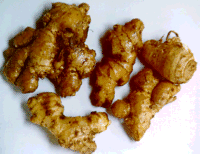
Ginger
Ginger speeds metabolic rate, plus it inhibits nausea and vomiting often caused by morning sickness or motion sickness.

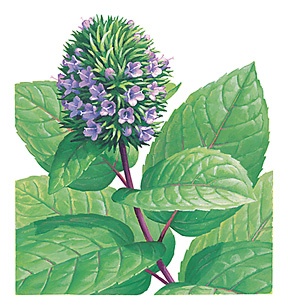
Peppermint
Peppermint is used to treat gastric and digestive disorders, as well as tension and insomnia.

Mustard
Mustard is a stimulant that can be used to relieve respiratory complaints.

Horseradish
Horseradish is a relative of the mustard family that acts as a digestive stimulant.

Cinnamon
Cinnamon is often used as an antidote for diarrhea and stomach upset as well as a metabolism booster.


Allspice
Allspice is an aromatic stimulant that helps to relieve indigestion and gas.


Garlic
Regular consumption of garlic can decrease blood pressure and cholesterol levels. It also aids digestion and prevents flatulence. Recent research shows garlic to be beneficial in the treatment of diabetes.

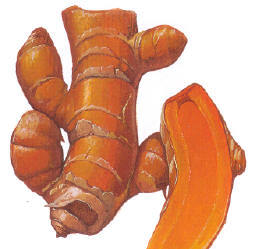
Turmeric
Turmeric is an antioxidant that neutralizes free radicals and therefore protects against cancer.


In conclusion use these spices to spice up your health
Spices and Herbs

The most popular articles

Articles around the world

FoodNavigator RSS