Showing posts with label curry leaves. Show all posts

Saturday, January 15, 2022

Curry leaves - aromatic fresh herbs used in cooking

Curry plant belongs to Rutaceae family which is a popular leaf-spice in food due to its distinct aroma by the presence of volatile compounds and ability to improve digestion.

The species name commemorates the botanist Johann König. The Murray commemorates Swedish physician and botanist Johann Andreas Murray who died in 1791. Hence the botanical name of the curry leaves is Murraya koenigii.

Curry leaves are a popular leaf-spice used in very small quantities for their distinct aroma due to the presence of volatile oil and their ability to improve digestion.

The curry leaves are a rich source of many carbazole alkaloids with a diverse chemical composition. Solvents like ethyl acetate, ethanol, petroleum ether, water and chloroform have been used by researchers to prepare the plant extracts, and compounds such as alkaloids, flavonoids carbohydrates, and sterol have been reported to be present in them.

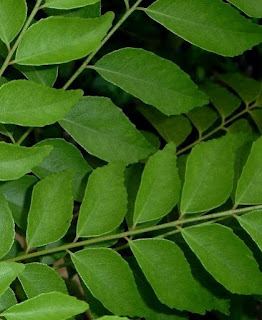
Curry leaves are aromatic in nature. The leaves are shiny and smooth with paler undersides. Leaves are pinnate, exstipulate, having reticulate venation and having ovate lanceolate with an oblique base, with 11-21 leaflets, in which each leaflet is 0.79 - 1.57 inch long and 0.39 - 0.79 inch broad.

Curry leaf is an important leafy vegetable. The leaves have a slightly pungent, bitter and acidic taste, and they retain their flavor and other qualities even after drying. They are hence used in various types of curries.

It mainly used in cooking to provide flavoring in cuisine including fish or meat curries, vegetables, fried rice, soup, pickles, egg omelet, scrambled egg, and curry powder as well. Besides, it used as the cuisine; curry leaves have used for centuries for biological activities in human health.

In the eastern Asian community, curry leaves traditionally used in diet to improve appetite and digestion.
Curry leaves - aromatic fresh herbs used in cooking

Thursday, January 06, 2022

Curry leaves juice – good source of β-carotene

Curry leaves are a popular leaf-spice used in very small quantities for their distinct aroma due to the presence of volatile oil and their ability to improve digestion.

Curry leaves (Murraya koenigii) belongs to family Rutaceae, is an aromatic, pubescent, deciduous shrub or small tree. Curry leave is found to be native mainly to India and Sri Lanka. Additionally, it can be found in some other South Asian countries as well.

The leaves have a slightly pungent, bitter and feebly acidic taste, and they retain their flavour and other qualities even after drying.

The fresh leaves are a good source of β-carotene. Curry leaves are a rich source of minor constituents, such as Ca, K, Mg, P, along with Fe, Mn, Se and Zn, in trace amounts.

Curry leaves play a pivotal role in the field of weight loss. The leaves when eaten raw or consumed as juice, serves as a detox drink to cleanse body from within, burn fat, reduce bad cholesterol and enhance digestion.

Fresh juice of curry leaves, with lime juice and sugar, is an effective medicine in the treatment of morning sickness, nausea and vomiting due to indigestion and excessive use of fats.

Cataract development can be prevented by using fresh juice of curry leaves. The oil of curry leave is reported to possess antibacterial, antifungal, hypolipidemic, anti-lipid peroxidative, hypoglycemic, antioxidant and anti-hypertensive properties.

Curry leaves contribute a strong promising action against cardiovascular disorders, hypertension and obesity.

Curry leave contains significant amount of phenolic and flavonoids compounds which are phytoconstituents responsible for lipid lowering and anti-obesity activities because of strong antioxidant potential.
Curry leaves juice – good source of β-carotene

Tuesday, November 09, 2021

Curry leaves for aroma and flavor

Curry leaves (Murraya koenigii) are a popular leaf-spice used in very small quantities for their distinct aroma due to the presence of volatile oil and their ability to improve digestion.

It belongs to the family Rutaceae (Citrus family) that consists of approximately 150 genera and 1500 species. Curry leaf is an important leafy vegetable. Its leaves are widely used in Indian cookery for flavoring foodstuffs.

Curry leaves is commonly found in the outer Himalayas, from the Ravi eastwards, ascending to 5,000 feet, in Assam, Chittagong, Upper and Lower Burma. It is also found in evergreen and deciduous forests of peninsular India, often as underwood

The leaves have a slightly pungent, bitter and feebly acidic taste, and they retain their flavor and other qualities even after drying. It is an important ingredient in Indian curries owing to its fragrance and aroma. This plant is known to be the richest source of carbazole alkaloids.

The major component responsible for the aroma and flavor has been reported as D-α-pinene, D-sabinene, caryophyllene, D-α-terpinol, cadinol, di-α-phellandrene, dipentene and cadinene.

Essential oils from curry leaves serves as a main component in the production of soap, lotions, massage oils, diffusers, potpourri, air fresheners, body fragrance, perfume oils, aromatherapy products, bath oils, hair treatments, and many more.
Curry leaves for aroma and flavor

Tuesday, October 13, 2020

Curry Leaves

Curry leaves (Murraya koenigii) are a popular leaf-spice used in very small quantities for their distinct aroma due to the presence of volatile oil and their ability to improve digestion. The plant belongs to the family Rutaceae. Leaves, exstipulate, bipinnately compound, 30 cm long, each bearing 24 leaflets, having reticulate venation; leaflets, lanceolate, 4.9 cm long, 1.8 cm broad, having 0.5-cm-long petiole.

The curry leaves are aromatic in nature and rich with various sources such as proteins, fibers, carbohydrates, minerals, nicotinic acid, vitamin C and carotene. Curry leaves have a great content major constituent responsible for the aroma and flavor has been reported as pinene, sabinene, caryophyllene, cadinol and cadinene.

Essential oils extracted from M. koenigii used as an important materials for manufacturing of soap, lotions, massage oils, diffusers, potpourri, scent, air fresheners, body fragrance, perfume oils, aromatherapy products, bath oils, towel scenting, spa's, incense, facial steams, hair treatments, and more.

Fresh curry leaves are the preferred form for cooking, due to the leaves lose their delicate fragrance soon after drying. Fresh leaves may be used directly after harvesting from a curry leaf tree and the leaflets are usually torn from the rib before used for cooking.
Curry Leaves

The most popular articles

Articles around the world

FoodNavigator RSS